- Tanim Prodhan
- Posts
- 🧾 Defined Benefit vs. Defined Contribution Pension Plans
🧾 Defined Benefit vs. Defined Contribution Pension Plans
How Your Future Paycheck Is Decided — The Easy Way to Understand Pension Math

Timeless Success Secrets
October 25, 2025
Most people think “a pension is a pension,” but not all retirement plans work the same way.
Some promise you a fixed monthly amount for life — others make you responsible for building your retirement fund.
Understanding which one you have could mean the difference between retiring comfortably or running out of money too soon.
Let’s break them down clearly.
🧱 What Is a Defined Benefit (DB) Pension Plan?
A Defined Benefit (DB) plan promises you a specific payout in retirement.
That payout is calculated based on a formula — usually tied to your salary, years of service, and a multiplier (percentage).
In simple terms:
Retirement Income = Years of Service × Final Average Salary × Benefit Multiplier
Example:
Years of service = 25
Final average salary = $60,000
Benefit multiplier = 2% (or 0.02)
Retirement Income = 25 × $60,000 × 0.02 = $30,000/year
This means you’ll receive $30,000 every year (often adjusted for inflation) for life after retirement.
📘 Key Point:
You don’t manage the investments — your employer or pension fund does. The employer shoulders the risk of ensuring there’s enough money to pay you.
💰 What Is a Defined Contribution (DC) Pension Plan?
A Defined Contribution (DC) plan doesn’t promise a fixed payout.
Instead, it defines how much is contributed each month by you, your employer, or both.
Your retirement savings depend on how well those investments grow over time.
For example:
You contribute $300/month
Employer matches $300/month
You both invest for 30 years
Your investments grow at an average of 7% annually
Your total savings after 30 years = $300 × 2 × (1.07³⁰ − 1) ÷ 0.07 = about $680,000
That’s your retirement fund, from which you’ll draw income later.
📘 Key Point:
Here, you bear the risk — if the market underperforms, your retirement payout will be smaller.
🌍 Global Names and Variations
Country | Defined Benefit Plan Equivalent | Defined Contribution Plan Equivalent |
United States | Traditional Pension Plan | 401(k), 403(b), IRA |
United Kingdom | Final Salary Scheme | Personal Pension, Stakeholder Pension |
Canada | Registered Pension Plan (RPP - DB type) | Group RRSP, Defined Contribution RPP |
Australia | Superannuation (some DB) | Accumulation Superannuation |
India | EPS (Employee Pension Scheme) | NPS (National Pension System) |
Japan | Corporate Pension Plan (DB type) | DC Corporate Pension |
Germany | Betriebsrente | Riester-Rente or Rürup Plan |
🧮 The Easy Math to Compare
Plan Type | Who Contributes | Who Bears Risk | Formula or Growth | Example Outcome |
Defined Benefit | Employer | Employer | Salary × Years × % | $30,000/year pension |
Defined Contribution | Employee + Employer | Employee | Depends on investment returns | $680,000 retirement fund |
⚙️ The Shift: From Industrial Age to Information Age
Industrial Age: Employers offered Defined Benefit pensions — loyalty meant security.
Information Age: Companies shifted to Defined Contribution systems — individuals now manage their own retirement.
Why the change?
Because DB plans became too expensive for companies as people started living longer.
Now, employees are expected to invest wisely and build their own nest egg.
🧠 Key Lessons
Know which plan you have. It determines how your future income is built.
DB = Predictable income, low control.
DC = Unpredictable income, high control.
DBs are vanishing in many private companies but still common in government jobs.
Investment literacy is essential for DC plans — because you manage the risk.
Action Steps
Check your pay stub or HR portal to see if your plan is DB or DC.
Ask your employer for your benefit statement — it shows your projected payout or contributions.
If you have a DC plan: Learn about basic investing — how to diversify, manage risk, and estimate future growth.
If you have a DB plan: Confirm whether it adjusts for inflation and what happens if you leave early.
Start tracking your future retirement income using free pension calculators online.
Get your Bonus worksheet by clicking here.
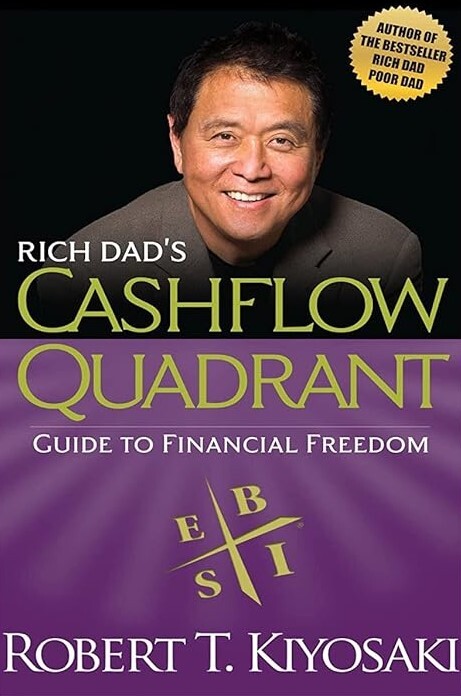
Why You Should Read Cashflow Quadrant
Most people don’t realize that their pensions quietly shifted from a guarantee to a gamble.
In the Industrial Age, workers could retire knowing exactly what they’d get — a Defined Benefit Plan promised lifelong income. But today, in the Information Age, that security is gone. Defined Contribution Plans put the responsibility — and the risk — entirely on you.
As Rich Dad’s Cashflow Quadrant explains, this change isn’t just about money — it’s about control. On the left side of the quadrant, employees rely on someone else for security. On the right side, investors and business owners take control of their own futures.
If you’ve ever wondered why pensions feel uncertain now — or how to stop depending on systems built to make you dependent — Cashflow Quadrant shows the mindset and skills you need to step into financial freedom.
Start reading Cashflow Quadrant today to understand the new rules of money before your next “retirement plan” surprises you. Click the link below 👇:
Disclaimer
This newsletter is for educational purposes only and does not constitute financial, legal, or investment advice.
Always consult a licensed financial planner or retirement specialist before making investment or pension decisions.
To read more on:
Teach Kids to Think Like Entrepreneurs, Not Employees:

💸 Why Your Paycheck Isn’t Really Yours:
Your House Feels Like a Dream — But Financially, It Might Be a Trap:
“Why Most People Stay Broke: The Debt Trap Explained”:
Private Placement: The Beginner to Intermediate Guide:
If you have liked reading so far then join the newsletter. Over here, I share stuffs like these as well as financial education. I believe that you will enjoy reading these. If you want to read them then join the newsletter with the link below:
